.svg)

PRESS RELEASE: Energy Storage Industry on Pace to Add 1 TWh to US Power Grid by 2032, Saving Americans $250 Billion as U.S. Electricity Demand Surges, New Analysis from the US Energy Storage Coalition Finds
FOR IMMEDIATE RELEASE
Media Contact:
press@energystorage.org
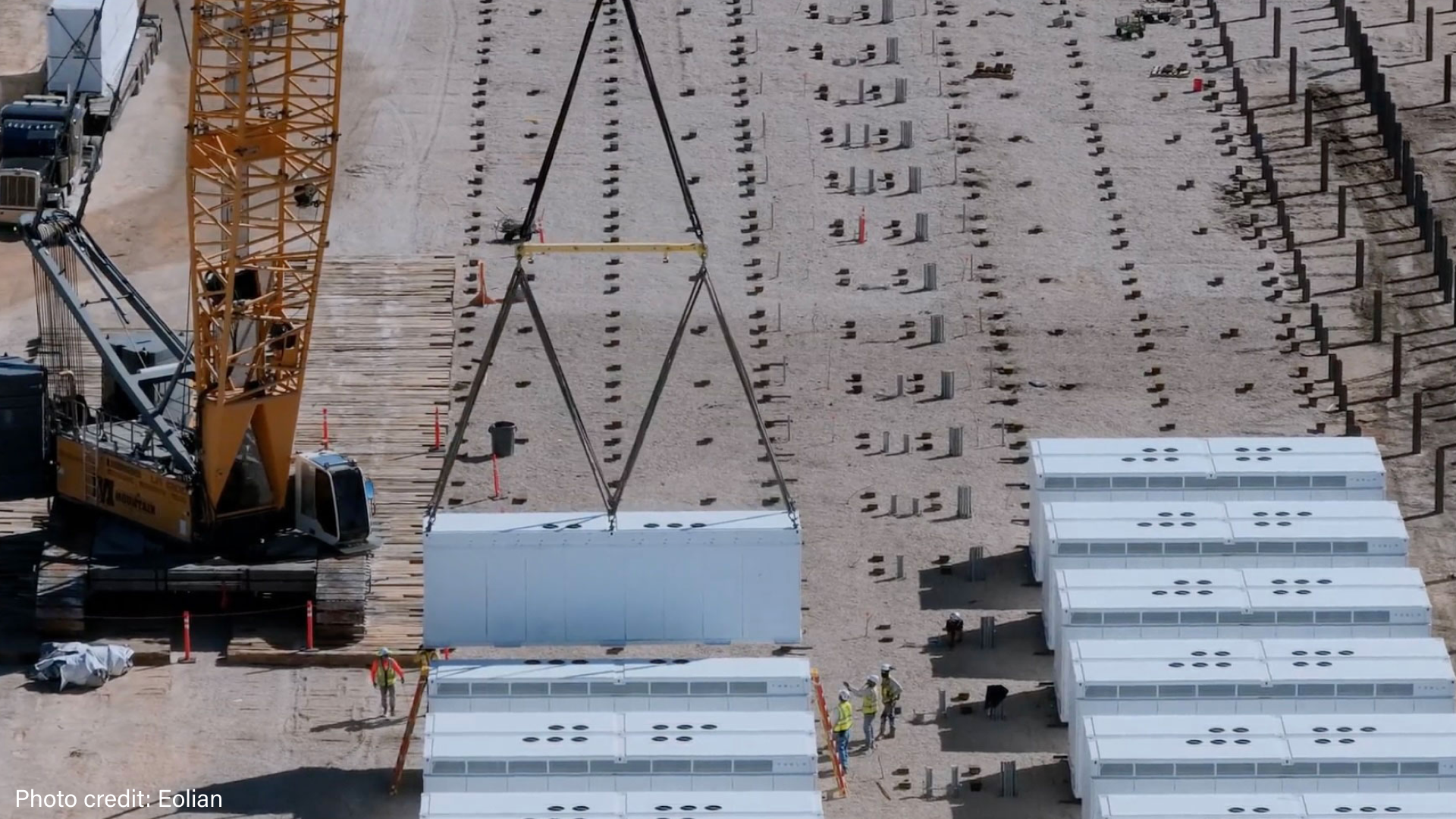
WASHINGTON, D.C., September 17, 2026 — The U.S. energy storage industry is on pace to deploy 1 terawatt-hour of energy storage on the U.S. power grid by 2032, an unprecedented scale-up that new analysis from the U.S. Energy Storage Coalition finds could save American families and businesses approximately $250 billion in power system costs over the next decade. The findings come as the United States confronts historic electricity demand growth and an urgent need to bring new power resources online faster. Energy storage can be deployed in as little as six months to two years, compared with five to seven years for a new unplanned power plant and seven to ten years for high-voltage regional transmission, giving the technology a unique speed-to-power advantage as the nation works to expand grid capacity.
The report also finds that storage also provides flexibility, increases reliability, and maximizes efficiency of existing infrastructure, three critical needs for the country’s dynamic power grid. Batteries can respond instantly to changing grid conditions, shift electricity across hours and provide capacity when it is most valuable, while strengthening reliability and getting more from existing generation and transmission infrastructure. Whether the United States captures the full economic and energy security benefits of that growth will depend in significant part on the policy and regulatory environment. The report finds the industry’s long-term trajectory, and the economic benefits captured by ratepayers, will be shaped by whether policy and regulatory frameworks allow storage to build, connect, manufacture and operate at the speed and scale demanded by the U.S. power system.
“America needs more power, and it needs it faster. Energy storage is uniquely positioned to meet that moment,” said Noah Roberts, Executive Director of the U.S. Energy Storage Coalition. “It can be built quickly, respond instantly and make every resource on the grid work harder, all while saving American families and businesses hundreds of billions of dollars. We have the technology, the demand and an American manufacturing base ready to scale. The opportunity now is to ensure our policy and regulatory frameworks allow us to build, connect and operate at the speed our power system demands.”
“American energy storage manufacturing has reached a turning point.” said Noah Roberts, Executive Director, U.S. Energy Storage Coalition. “The speed and scale of this accomplishment is a testament to the industry’s commitment to strengthening American industrial power, creating thousands of new jobs, and meeting the historic need for more energy. Americans want affordable, reliable power and U.S. manufactured energy storage is a critical part of the solution.”
Scaling Energy Storage Could Save Americans $250 Billion
The Coalition’s modeling finds that deploying roughly one terawatt-hour of energy storage could reduce the cumulative cost of building and operating a reliable U.S. power system by approximately $400 billion over the next decade compared with a future in which storage deployment is severely constrained. Importantly, reliability requirements remain the same in both scenarios.
Long-term power system modeling does not fully capture storage’s ability to suppress wholesale price spikes, reduce congestion and peak demand, defer transmission and distribution upgrades, or provide additional reliability and resilience during periods of extreme grid stress.
Storage delivers those savings because one asset can do the work of many. Batteries capture low-cost electricity when supply is abundant and deliver it when demand and prices are highest. Rather than solving each grid need with a separate investment, storage can provide capacity, energy, congestion relief and essential grid services from the same asset.
"We're only beginning to see the magnitude of affordability benefits that large-scale energy storage will bring to American consumers," said Tristan Doherty, Chief Product Officer at LG Energy Solution Vertech and Chair of the U.S. Energy Storage Coalition. "Most people still think of energy storage a reliability tool, but its impact is much broader. Storage helps utilities and grid operators get more out of the infrastructure they already have, reducing peak power costs, relieving congesting and strengthening reliability. Deployed at the terawatt-hour scale, these benefits will meaningfully impact the bottom line for American families and businesses."
Speed to Power: Capacity in Months, Not Years
As a manufactured, modular technology, energy storage can be deployed in a fraction of the time required for many other forms of energy infrastructure. That speed-to-power advantage can quickly boost grid capacity and help avoid the power supply crunches that can lead to dangerous grid conditions and costly price spikes.
That speed is increasingly consequential as electricity demand grows faster than traditional infrastructure can be planned, permitted and built. Fifty-six GW of energy storage is already in the U.S. development pipeline, including 23 GW under construction and 33 GW in advanced development.
Storage can also help unlock constrained grid capacity and make existing generation and transmission infrastructure work harder while longer-lead infrastructure catches up.
“America cannot meet tomorrow’s power demand on yesterday’s infrastructure timelines,” said Jeff Monday, SVP and Chief Growth Officer at Fluence. “Energy storage can be manufactured at scale and deployed in months, bringing critical capacity online faster. At Fluence, we are combining proven technology, deployment expertise, and a growing network of domestic manufacturing partners to make that speed repeatable across the U.S.”
Energy Storage Gets More Power from the Grid America Already Has
Meeting historic demand growth is not simply a question of how much new infrastructure America can build. It is also a question of how efficiently the country uses the power system already in place. Energy storage can capture electricity when it is abundant and inexpensive and return it to the grid when demand is highest, allowing existing generation and transmission assets to operate more efficiently. It can also reduce costly peak power, relieve congestion and defer infrastructure investments, getting more capacity from infrastructure already paid for by consumers.
“Energy storage helps lower energy costs by making better use of the infrastructure consumers have already paid for,” said Eric Stoutenburg, Chief Development Officer at Eolian. “By relieving transmission constraints, supporting existing power plants and adding capacity at critical points on the grid, storage allows those assets to serve more demand more efficiently while reducing the need for costly new investment.”
Texas Shows Storage Delivering Affordability and Reliability at Scale
Texas is already demonstrating what happens when storage reaches meaningful scale. Approximately 15 GW of energy storage was deployed in Texas between 2020 and 2025, helping generate an estimated $1.5 billion in energy cost savings during periods of winter cold and summer heat in 2024. The state recorded zero grid emergencies in 2025 after reaching 13 in 2023.
“Texas is an example of what energy storage can do when it’s deployed at scale: strengthen reliability, reduce costs and help the grid respond quickly during periods of high demand,” said Ricky Davis, senior vice president for development at ENGIE North America. “Looking ahead, the priority is turning that momentum into a practical roadmap for scaling storage wherever the grid needs it most.”
American Manufacturing Is Ready to Meet the Moment
The economic opportunity extends from the power grid to factory floors across the country. The energy storage sector has committed to invest $100 billion in American grid battery manufacturing, and the Coalition envisions at least 150 GWh of annual U.S. battery cell and energy storage system manufacturing capacity through the 2030s. A durable domestic supply chain can support America’s growing power needs at home while positioning U.S. companies to compete in a rapidly growing global market for advanced energy technologies.
The rapid expansion of American manufacturing is also helping transform the economics of storage. As the global supply chain has matured, including the rise of battery factories in the United States, the report finds storage has increasingly become among the most cost-effective capacity that can be added to the power grid.
“The energy storage industry is already building the manufacturing capacity to deliver at terawatt-hour scale,” said Mike Snyder, Vice President of Energy and Charging at Tesla. “American-made energy storage systems can unlock more power from the generation capacity America already has, enabling a more affordable, reliable and flexible grid as we race to meet exceptional demand for more electricity over the next five years.”
Policy and Regulatory Certainty Will Shape the Path to 1 TWh
Energy storage has entered a period of rapid commercial scale-up, but the report finds the industry’s long term trajectory, and the economic benefits ultimately captured by American ratepayers, will depend significantly on the policy environment surrounding deployment, domestic manufacturing and market access.
Tax and regulatory certainty can provide confidence for long-term investment in projects and American manufacturing. Electricity market rules that recognize storage’s unique flexibility and broad applications can unlock additional deployment. And streamlined permitting and interconnection can preserve one of storage’s most important advantages at this moment: its ability to bring power to the grid quickly.
As storage expands into new regions, the report also finds that outdated market structures could affect how quickly projects reach the grid. Regional electricity market queues show substantial storage development poised for the Great Plains, Midwest, Central Southern states and Mid-Atlantic, but the pace and scale of that expansion may depend on reforms that remove barriers to storage participation and properly recognize the technology's value.
“America does not simply need more power. It needs to use the power system it has, and every new resource it builds, more effectively,” Roberts said. “A stable policy and regulatory environment gives this industry the runway to invest, manufacture and deploy at the scale necessary to strengthen the grid, reinforce American energy security and deliver these savings to consumers nationwide.”
About the U.S. Energy Storage Coalition
The U.S. Energy Storage Coalition unites America’s leading grid battery manufacturers, energy storage developers, owners, and operators. The Coalition advances policies and solutions to ensure grid reliability amidst historic demand for power, lower energy costs for all Americans, strengthen grid capacity to support new industrial infrastructure, and rapidly scale American manufacturing and minerals production.